
Modular Building Maintenance Requirements You Shouldn’t Ignore
A modular building can last a lifetime—if it’s well maintained. Find out what maintenance teams look for to ensure that your building stays in top shape.
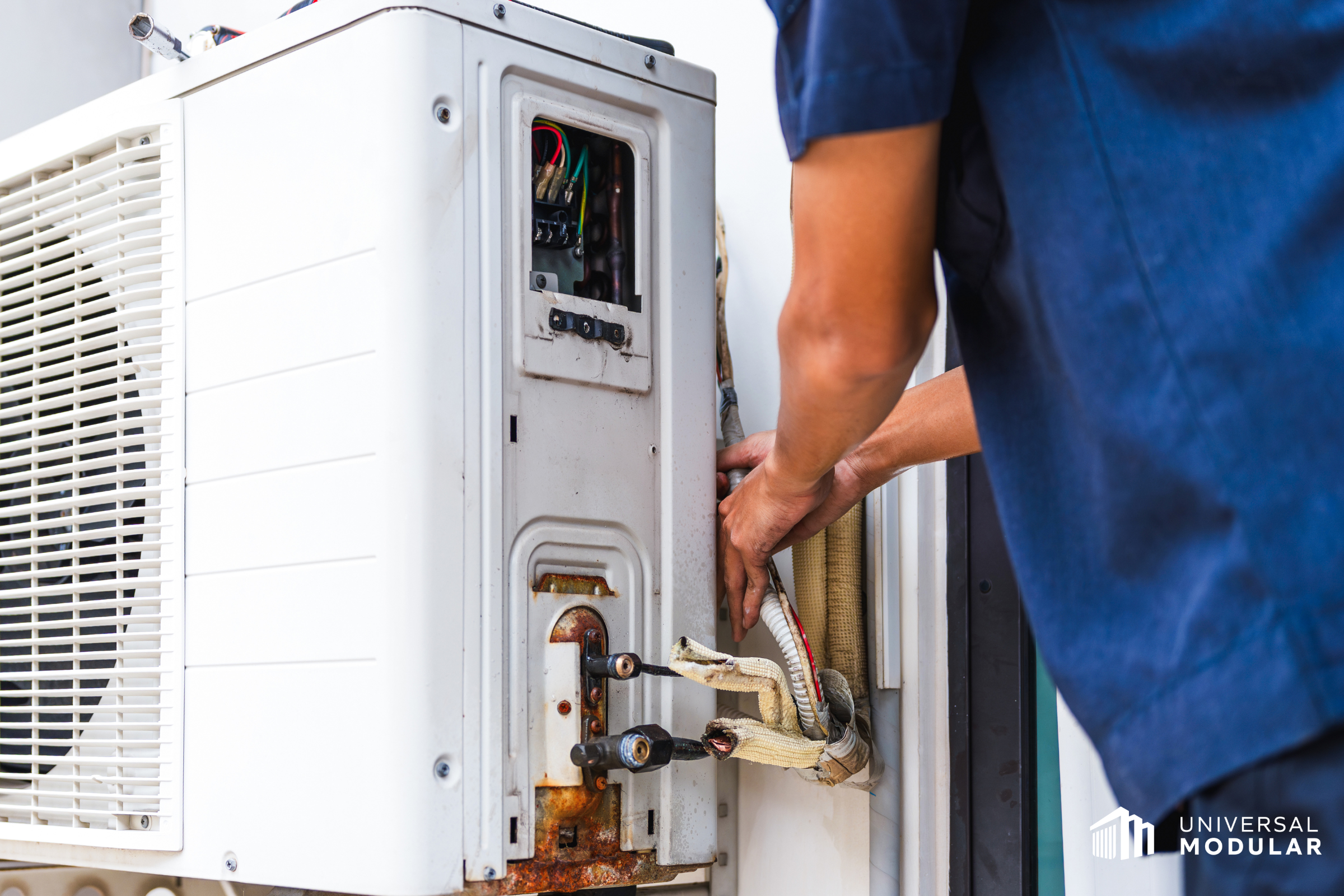
Proper HVAC system maintenance is critical to ensuring longevity in your modular building. Photo: Canva Images
As is the case with traditional construction projects, a modular building can show wear and tear over time. The key to limiting this—and to extending your modular building’s lifetime—is routine maintenance.
Those who own or manage a modular building should schedule regular check-ups with maintenance managers to ensure that any irregularities are addressed quickly. Don’t worry about fixing anything yourself—that’s what the experts are for—and don’t assume someone else is already handling the problem.
If you notice anything amiss, your modular building maintenance manager should be your first call.
How Long Can Modular Buildings Last?
Simply put, there’s no cap on how long a modular building can last—as long as it is properly maintained.
Crystal Rodriguez, who oversees modular building maintenance at 20 properties as Modular Management Group’s fleet manager, says it’s possible for buildings that have been around for over a decade to look like they were just installed.
“The key to maintaining a modular building is ensuring that your building is in 100 percent condition,” she said.
Routine Maintenance Checks Are Key
Rodriguez recommends that clients schedule quarterly appointments with their modular building’s designated maintenance manager. As fleet manager, she attends annual appointments with each of her clients so that she can inspect the buildings in person.
Your modular building maintenance team should have a checklist for each quarterly and annual appointment. In addition to general interior and exterior assessments, that checklist includes more specific items like door handles, HVAC systems, roofs, plumbing, and more.
“We go through and mark off every single location, every single tile and mate line,” Rodriguez said. “Every corner of that building is inspected.”
Important Areas to Maintain
HVAC Systems Are Frequently Overlooked—But Shouldn’t Be
Keeping the HVAC system maintained is one of the top concerns for modular building maintenance managers. In addition to ensuring that air conditioners and heaters work when they’re needed, having well-maintained air systems helps clients avoid having to replace costly parts.
“The one key thing that I always recommend is: Ensure your HVAC systems are maintained,” Rodriguez urged, noting that this area of maintenance “often gets overlooked.”
In contrast to pricey replacement parts, properly maintaining HVAC systems is relatively affordable. “I see it as an investment in elongating the life of your building,” Rodriguez said. “If not maintained, you will start seeing signs of tear within one to two years.” While well-maintained HVAC units can typically last 10-15 years with minimal issues, systems that are not cared for “will start seeing signs of tear within one to two years,” she noted.
Your modular building maintenance manager will check the HVAC system during their quarterly visits. But there are ways that you can be proactive to ensure the system stays in top shape.
First, you should clean or replace air filters regularly to prevent the system’s ducts from clogging. This may need to happen monthly, though your maintenance manager can specify how often air filter replacements will be needed for your building. How often air filters need to be replaced depends on your building’s environmental conditions—though in most cases, they should be changed quarterly. “I strongly recommend having a certified technician perform the replacement to ensure the correct filter size is set and to maintain accurate service records,” Rodriguez said, adding that having clear written documentation of any maintenance performed "is always best.”
Clogs in the condensate drain can inhibit the HVAC system’s functionality. The system’s condensate drain should be checked regularly and cleaned when necessary.
Make sure the condenser and evaporator coils are clear of dust and other debris. Dirty coils make it harder for the HVAC system to pull heat in—or out—of your building. For the same reason, make sure the system’s vents are kept clean and aren’t blocked by furniture or other objects.
Sudden changes to your building’s airflow, fluctuating temperatures, leaks, and even strange rattling noises could all be signs that your HVAC system needs attention. If you have questions related to regular upkeep, your modular building maintenance manager will have the answers.
A Flawed T-grid Will Have a Domino Effect
A modular building maintenance manager will pay close attention to a modular building’s T-Grids (the false ceiling framework that supports HVAC ductwork and hides it from view). Though proper installation plays a role in T-grid longevity, building shifts that occur naturally over time can also affect them.
If a T-grid looks like it’s on the verge of falling, it’s only a matter of time before another follows—and that presents a safety issue.
When you start seeing signs that your modular building may have shifted, it’s time to call your maintenance manager. Left unchecked, a problematic T-grid “could start affecting the function of the building within a year or two,” Rodriguez said.
Roof Leaks Are Bad News
Roof leaks are a modular building’s “worst enemy,” Rodriguez said, adding that investing in high-quality roofing materials is worth the splurge because it’ll save clients on repairs later.
Leaks are often caused by tears in the EPDM (ethylene propylene diene terpolymer), the long-lasting rubber roofing material used often for modular buildings because of its ability to withstand extreme weather and the ease with which it can be repaired.
Tears in the EPDM—which is fitted on top of your building’s roof—can occur in a variety of scenarios, including when a person walks across it and nicks the material or when a screw is placed too deep. Improperly sealing a modular building’s mate lines—or even using too much material during the build phase—can also cause leaks later on.
Thicker EPDM membranes are thus preferable for buildings in areas that get a lot of precipitation, and tend to last longer than asphalt and felt materials.
For top-quality roofing, Rodriguez recommends selecting MuleHide products. In addition to the brand’s EPDM offerings, MuleHide’s JTS 1 (Joint and Termination Sealant) is a favorite among modular building maintenance managers because it works as a caulk on wood, concrete, and vinyl surfaces, sealing the building’s mate lines in a way that ensures no water can seep through.
“You could use it internally, externally,” Rodriguez said. “MuleHide is 100% the brand that I would recommend.”
Rodriguez also recommends keeping MuleHide’s Weathered Membrane Cleaner and Low VOC Primer on hand for cleaning and priming EPDM membranes.
So how can you tell if your modular building has a leak? The easiest way is to look for stained ceiling tiles. Once it’s obvious that a tile is discolored, the problem must be tackled immediately by properly patching the leak, working from the inside out.
But not all leaks are caused by roofing issues. Rodriguez recalls one building where the source of the problem was a busted PVC pipe, something she discovered by removing a stained ceiling tile. This is one of many reasons why it’s important to seek help from your modular building maintenance team instead of attempting to solve a problem yourself.
A Malfunctioning Door or Window Is a Red Flag
Sudden difficulties closing or opening doors or windows could indicate that your building has begun to shift. Your modular building maintenance manager should be checking every door and window during their scheduled appointments to make sure they are not jamming, sitting too high, or sitting too low.
Any of those changes will necessitate a trip under the building. If the module beneath the problematic door or window doesn’t appear to have moved, that door or window will be fixed and flagged for a closer inspection at the next quarterly maintenance appointment.
What Else Should You Keep an Eye On?
Regularly flushing toilets is one way to make sure that your modular building’s plumbing system is in good working order. Meanwhile, hot water delays could be a sign that your building’s heater needs to be flushed or replaced.
Depending on where your modular building is located, the weather may necessitate more upkeep. For example, a modular building in Florida may need special attention if the humidity causes excess water to gather on its roof.
Caulking doors and windows in humidity-prone areas can help prevent water from seeping in. In areas that get a lot of snow, maintenance teams will look for potential building shifts and issues that may arise with the HVAC systems.
Contact UMI today to start planning the modular building you’ll have for decades to come.